Explore, connect, thrive in
the expat community

Expat Life: Local Discoveries, Global Connections

Argentina’s small and medium-sized businesses brace for total devastation

10,000 companies have gone out of business since Milei took over.

Wow that's a lot of job losses. And the number is probably much higher. The article says "registered job losses". My friend there told me that many people are working under the table to save on taxes. I wonder how many of those people have lost jobs. During a tough recession like this, when someone loses a job can they easily find another if everyone is laying off during a recession?
 
Wow that's a lot of job losses. And the number is probably much higher. The article says "registered job losses". My friend there told me that many people are working under the table to save on taxes. I wonder how many of those people have lost jobs. During a tough recession like this, when someone loses a job can they easily find another if everyone is laying off during a recession?
It's true Uncle Wong. There are a lot of jobs where people just get paid in black as we say here. Also many jobs like maids aren't registered. Some local friends have cut back on # of times per week with their maids. So some people that still have jobs have hours cut.
 
This is what is happening to restaurants. This restaurant was selling 4,000 pizzas per month and now they are selling 900 - 1,100 pizzas per month. Look at what his water bill has done in the past month. Getting 1 million peso water bills for a cycle of 2 months. That is not even counting electricity or gas bills.

This is the reason why even Don Julio is very slow now and sending out promotions to eat there.

 
This is what is happening to restaurants. This restaurant was selling 4,000 pizzas per month and now they are selling 900 - 1,100 pizzas per month. Look at what his water bill has done in the past month. Getting 1 million peso water bills for a cycle of 2 months. That is not even counting electricity or gas bills.

This is the reason why even Don Julio is very slow now and sending out promotions to eat there.


That is a lot of debt to have for a water bill. How much water are they using! I heard from a friend it's not uncommon for some to be sharing water or electricity. I don't know much about that but to have a $5,000 USD delinquent water bill is crazy. He is probably behind on all his other bills too. How do you sell 4,000 pizzas a month and not be able to stay in business or pay your bills?
 
That is a lot of debt to have for a water bill. How much water are they using! I heard from a friend it's not uncommon for some to be sharing water or electricity. I don't know much about that but to have a $5,000 USD delinquent water bill is crazy. He is probably behind on all his other bills too. How do you sell 4,000 pizzas a month and not be able to stay in business or pay your bills?
They have big penalties/interest to pay late so this business owner might just be so far behind. Sounds like his business will go under very soon.
 
Kudos to those that predicted this would happen. Sounds like a year over year drop. Argentina's industrial sector is only at 57.7% of its installed capacity in November 2025. 5% lower than the same time last year. This shows that there is no clear sign of a sustained recovery in industrial activity.

 
Kudos to those that predicted this would happen. Sounds like a year over year drop. Argentina's industrial sector is only at 57.7% of its installed capacity in November 2025. 5% lower than the same time last year. This shows that there is no clear sign of a sustained recovery in industrial activity.

Ugly. It sounds like besides the petroleum sector it is ugly. I've never seen people so proud to pay high first world prices and make third world level salaries. Puzzling.


G-tY8BxbQAApWFh.jpeg
 
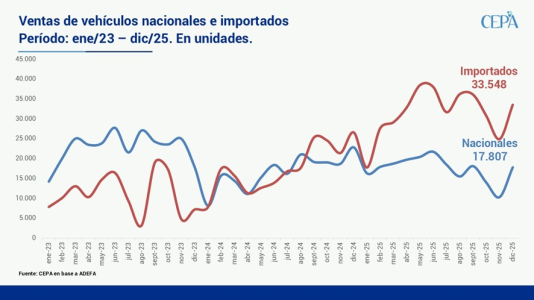
These lazy and inefficient local companies can't compete with imports from China. You probably can see what locally made stuff vs. import stuff is going to look like. No real reason to produce here instead of importing it outside of Argentina. Costs are too high here.

G-pldyzbQAQEAaz.png
 
Kudos to those that predicted this would happen. Sounds like a year over year drop. Argentina's industrial sector is only at 57.7% of its installed capacity in November 2025. 5% lower than the same time last year. This shows that there is no clear sign of a sustained recovery in industrial activity.

I was just reading in the Clarin today and the downsizing sounds like it continues.


Nearly 2,300 Jobs at Risk as Companies Announce Layoffs


Between December and January, at least nine companies announced layoffs or downsizing plans that put nearly 2,300 jobs at risk. Falling consumption and increased competition from imports are the main drivers behind these decisions.

Why this is happening

  • Lower purchasing power has reduced sales across multiple sectors.
  • Consumers are increasingly choosing cheaper, second-tier brands.
  • Imported products are becoming more competitive, putting pressure on local manufacturers that struggle to match prices.

The numbers

  • 2,292 jobs are affected.
  • 60% of the announcements were made in January.

Company-by-company breakdown


Mercado Libre (e-commerce & technology)

  • 119 layoffs regionally, including 32 in Argentina.
  • The company said the cuts are limited to UX and content teams and do not affect its growth plans.

Lácteos Verónica (food industry)

  • Around 700 jobs at risk.
  • 200 dismissal requests have already been filed.
  • The company’s three plants in Santa Fe are paralyzed, and it carries a large unpaid wage debt.

TN & Platex (textile industry)


  • 360 layoffs due to the closure of production lines.
    • Tucumán: 190 jobs lost
    • La Rioja: 132 jobs lost
    • Corrientes: 30 jobs lost
  • The union rejects the company’s proposal to pay severance in installments.

Vassalli Fabril (agricultural machinery)

  • 280 workers affected at the Firmat plant.
  • Employees describe the situation as a de facto shutdown, citing unpaid wages and no communication from management.
  • The provincial government has said it will try to intervene.

Georgalos (food industry)

  • 600 workers placed on rotating suspensions.
  • 25% salary reduction implemented.
  • The measures were announced in December, with no clarity yet on future staffing.

Lamb Weston (food industry)

Closed its Munro plant, laying off 100 workers.
  • Operations will be concentrated in Mar del Plata, where the company invested USD 320 million in 2025.

Farmacias del Dr. Ahorro (retail)

  • Closed 11 of its 40 stores.
  • Between 90 and 110 workers lost their jobs.
  • The company requested bankruptcy protection with debts of around $7.3 billion pesos.
  • Mandatory conciliation is currently underway.

Sealed Air (industrial & packaging)

  • 65 layoffs in Quilmes.
  • The company cited lower demand from food producers, showing how weaker consumption is affecting suppliers as well.

Lustramax (industrial inputs)

  • 29 employees laid off so far.
  • The company filed a Preventive Crisis Process, which could lead to up to 45 layoffs, paying 50% of severance.
  • Workers remain in industrial action.

What’s next


Several cases are still unresolved, with mandatory conciliations, union negotiations, and provincial government involvement ongoing. For now, Argentina’s labor market continues to face high uncertainty, especially in industries tied to consumption and domestic manufacturing.



I was just reading in the Clarin today and the downsizing sounds like it continues.


Nearly 2,300 Jobs at Risk as Companies Announce Layoffs


Between December and January, at least nine companies announced layoffs or downsizing plans that put nearly 2,300 jobs at risk. Falling consumption and increased competition from imports are the main drivers behind these decisions.

Why this is happening

  • Lower purchasing power has reduced sales across multiple sectors.
  • Consumers are increasingly choosing cheaper, second-tier brands.
  • Imported products are becoming more competitive, putting pressure on local manufacturers that struggle to match prices.

The numbers

  • 2,292 jobs are affected.
  • 60% of the announcements were made in January.

Company-by-company breakdown


Mercado Libre (e-commerce & technology)

  • 119 layoffs regionally, including 32 in Argentina.
  • The company said the cuts are limited to UX and content teams and do not affect its growth plans.

Lácteos Verónica (food industry)

  • Around 700 jobs at risk.
  • 200 dismissal requests have already been filed.
  • The company’s three plants in Santa Fe are paralyzed, and it carries a large unpaid wage debt.

TN & Platex (textile industry)


  • 360 layoffsdue to the closure of production lines.
    • Tucumán: 190 jobs lost
    • La Rioja: 132 jobs lost
    • Corrientes: 30 jobs lost
  • The union rejects the company’s proposal to pay severance in installments.

Vassalli Fabril (agricultural machinery)

  • 280 workers affected at the Firmat plant.
  • Employees describe the situation as a de facto shutdown, citing unpaid wages and no communication from management.
  • The provincial government has said it will try to intervene.

Georgalos (food industry)

  • 600 workers placed on rotating suspensions.
  • 25% salary reduction implemented.
  • The measures were announced in December, with no clarity yet on future staffing.

Lamb Weston (food industry)

Closed its Munro plant, laying off 100 workers.
  • Operations will be concentrated in Mar del Plata, where the company invested USD 320 million in 2025.

Farmacias del Dr. Ahorro (retail)

  • Closed 11 of its 40 stores.
  • Between 90 and 110 workers lost their jobs.
  • The company requested bankruptcy protection with debts of around $7.3 billion pesos.
  • Mandatory conciliation is currently underway.

Sealed Air (industrial & packaging)

  • 65 layoffs in Quilmes.
  • The company cited lower demand from food producers, showing how weaker consumption is affecting suppliers as well.

Lustramax (industrial inputs)

  • 29 employees laid off so far.
  • The company filed a Preventive Crisis Process, which could lead to up to 45 layoffs, paying 50% of severance.
  • Workers remain in industrial action.

What’s next


Several cases are still unresolved, with mandatory conciliations, union negotiations, and provincial government involvement ongoing. For now, Argentina’s labor market continues to face high uncertainty, especially in industries tied to consumption and domestic manufacturing.



What happened to VLLC. 🤷‍♀️
 
Back
Top